How to Handle Equipment Failure and Downtime Situations

Unplanned equipment downtime can quickly disrupt production, strain maintenance resources, and increase operating costs. When a critical machine goes down, the immediate priority is getting it back online—but the fastest solution is not always the most cost-effective long-term choice. 

CDWdrives repair services

When equipment fails, the right next step depends on more than speed alone. Repair, refurbishment, retrofit, reverse engineering, and replacement each offer different benefits depending on your timeline, budget, and long-term performance goals. CDWdrives helps identify the most practical solution with experienced engineering support 


Which repair options save the most money and time?

When several paths are available to restore performance, the best choice depends on your equipment’s current condition, production demands, and long-term operational goals. Below are five common approaches to consider.

1. Repair

Repairing existing equipment is often the quickest and most straightforward option. A repair returns the machine or system to the condition it was in before the failure occurred. Damaged components are replaced if necessary, but the equipment is not upgraded.

If your system was performing well before the breakdown, repair may be the most practical and cost-effective path to getting back into operation. CDWdrives can inspect the failed equipment, identify the cause of failure, and provide a detailed repair quote and turnaround estimate.

2. Refurbish

Refurbishment restores older equipment so it looks and performs more like it did when it was new. This process may include inspection, repair, replacement of worn components, cleaning, adjustment, re-lubrication, and other maintenance procedures that improve overall condition and performance.

Refurbishment can be a strong option when equipment still has useful life remaining, but wear and age are affecting reliability or efficiency.

3. Retrofit

A retrofit adds new components, features, or technologies that were not part of the original system design. This approach can modernize older machinery and help operations benefit from newer capabilities such as Industrial Internet of Things (IoT) connectivity, predictive maintenance, remote monitoring, and improved control performance.

Retrofit is often a smart choice when the current machine structure is still sound, but the technology supporting it is outdated.

4. Reverse engineer

Reverse engineering becomes especially valuable when critical components are obsolete or replacement parts are difficult to obtain. Instead of replacing an entire machine or system, the failed part can be analyzed and recreated to restore operation.

CDWdrives provides reverse engineering support to help customers overcome part obsolescence, reduce lead times, and extend the life of their equipment.

5. Replace

Replacement involves removing the existing machine or system and installing a completely new one. A new system may improve productivity, efficiency, durability, and safety while reducing noise and energy consumption.

Although replacement may seem like the longest path, that is not always the case. With experienced engineers available to support system design and component selection, a replacement project can sometimes provide the strongest long-term return on investment.



Questions to ask before choosing the best option

Before deciding which of the repair options to save money and time is right for your operation, consider the following questions.

1. What is your timeline?

If you can plan work during scheduled maintenance windows, you may have time to consider refurbishment or retrofit options that deliver greater long-term value. If you are dealing with an immediate breakdown, the need to restore production quickly may narrow your choices.

CDWdrives can evaluate equipment failure through testing, disassembly, and inspection to identify wear, breakage, and other damage. Because we source from high-quality manufacturers, we can also help shorten the time required to secure replacement components.

If the same failures occur repeatedly, it may be worth retrofitting predictive maintenance technologies into the system. While the upfront cost may be higher than a basic repair, the long-term value can be significant if it helps prevent repeated unplanned downtime.

2. How was the system performing before the breakdown?

If the machine was operating well before the failure, a repair may be all that is needed. If performance issues already existed—such as poor accuracy, limited speed, or inconsistent operation—it may make more sense to refurbish, retrofit, or replace the equipment.

3. Is the system using more energy than it should?

Older machinery can consume more energy than newer equipment or updated systems. If energy costs are becoming a concern, retrofitting or replacing the system may improve efficiency and reduce operating expense over time.

4. Is machine noise becoming a problem?

Excessive noise can indicate aging components or outdated equipment design. Upgrading components through retrofit—or replacing the machine entirely—may help reduce noise while improving reliability and performance.

Tips for using your maintenance time wisely!

Plan downtime to make improvements


If you can schedule downtime in advance, you have an opportunity to improve more than just the failed component. Planned maintenance windows create time to make proactive upgrades instead of simply reacting to breakdowns.

Predictive maintenance technologies are now more accessible and cost-effective than ever. Monitoring components can be installed on many systems to detect issues before failure occurs. Automated devices can also help manage lubrication and other routine preventive maintenance tasks. Compared with repeated emergency repairs, these upgrades often provide stronger long-term savings.

Keep critical spare parts available

When a machine is down, delays in sourcing parts can extend lost production time. In some cases, the required component may not be immediately available. Keeping critical spare parts on hand can help your maintenance team or repair provider respond faster and reduce the impact of unexpected failures.

Use downtime to review safety compliance

A shutdown can also create an opportunity to confirm that your equipment meets current safety requirements. While the machine is out of service, it may make sense to inspect the system and upgrade outdated safety devices where needed.

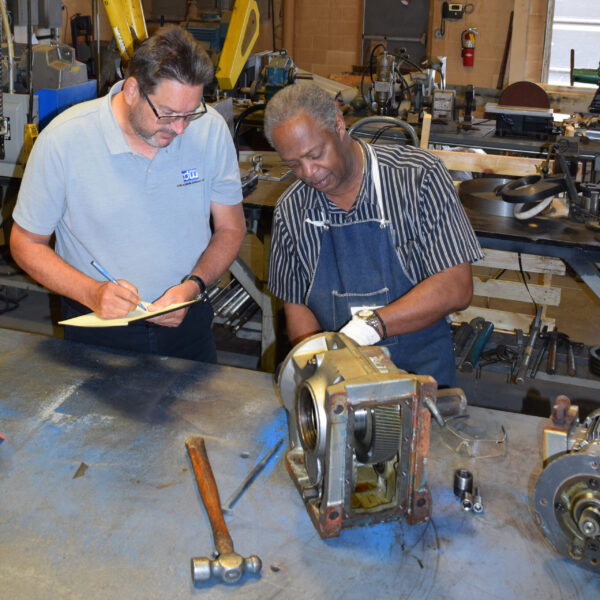
CDWdrives shop technician and engineer analyzing repair
CDWdrives repair services

Summary

Equipment failures can cost thousands of dollars in lost productivity, so selecting the right response is critical. The best repair options to save money and time depend on your timeline, system condition, performance expectations, energy use, safety needs, and parts availability.

In some situations, a simple repair is the most cost-effective solution. In others, refurbishment, retrofit, reverse engineering, or replacement can reduce future downtime and improve long-term performance.

CDWdrives supports that decision with experienced engineering guidance, repair evaluation, and practical recommendations focused on reliability, performance, and long-term value.